New instructors at VCC can get support with this brief overview of foundational strategies and resources to create a successful learning experience for students.
Each year, CTLR offers at least one “Orientation to Teaching at VCC” workshop. Here is the slide deck from our most recent workshop: Orientation to Teaching at VCC Dec. 2025 (PDF)
- VCC Strategic Innovation Plan – understand the values guiding VCC and strategic priorities related to teaching;
- Educational policies like copyright, academic integrity, students with disabilities, and student non-academic conduct related to the classroom;
- Official program content guide and course outlines – check with your department leader. Make sure your course syllabus aligns with the official course outline;
- Online Classroom Agreement
Moodle is the online learning management system for VCC courses. It supports interactive learning, resource sharing, automated feedback, grading and more. Moodle course shells are automatically created for most programs/courses. Each course has a unique Moodle course ID. The eLearning Support team provide technical support for Moodle and other VCC approved educational technologies.
“Backwards design” is a three-step process for course design that starts by identifying what students should be able to know or do (desired learning outcomes) at the end of the course, and then aligning assessments and learning activities to ensure students reach those outcomes. Course design does not start from “content” or “topics”. See links below to use it in planning your own course.
- Going Forward with Backward Design (4-min video)
- Course planning with backward design
- Course Map (link to Course Planning later)
Bloom’s taxonomy is a key educational theory used to define levels of learning goals within the three domains of learning: cognitive, affective and psychomotor. It also guides the design of assessments that will accurately measure achievement of those learning goals, and the learning activities that help students reach those learning goals. Make sure your students are aware of the learning objectives for each lesson.
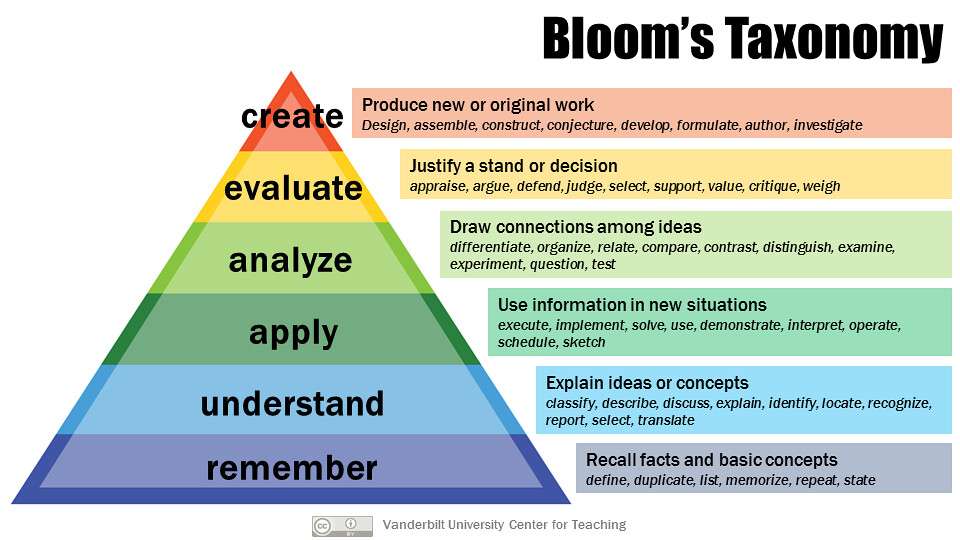
More resources on Bloom’s taxonomy and writing learning objectives:
- Bloom’s taxonomy learning activities and assessments (University of Waterloo)
- VideoScribe – Writing Learning Objectives
- Writing Good Learning Outcomes (self-paced course from CTLR).
A well-designed syllabus gives students a clear understanding of your expectations, what they can expect of you and a road map for the course. Your course syllabus should align with the official course outline in terms of course description, evaluation plan and topics; and with department standards. Use the syllabus checklist or accessible Word document below to create yours.
For more information, visit the dedicated Course Planning page.
Lesson planning is essential to student (and teacher) success as it identifies learning objectives for the lesson, aligns assessment and activities with the learning objectives, specifies materials needed for the lesson, supports effective time management, ensures an organized flow, and keeps students actively engaged when lecture limited to 12 minute chunks or less. It’s also a valuable teaching tool/record for future course offerings.
- BOPPPS Model (6-min video)
- BOPPPS Lesson Plan Infographic (PDF)
- BOPPPS Template (University of Calgary) (Word doc)
- BOPPPS Template (Word doc)
- Lesson Planning Tutorial: In this online module from McMaster University, you will learn about lesson planning, including its key components and alignment strategies.
Student wellbeing is supported through using effective teaching strategies, creating an environment of belonging and inclusion, and holistic support for students. See below for some practical ideas of how instructors can support wellbeing in the classroom and onto our next page to learn more about creating positive learning environments.
- Student services at VCC (1-min video)
- 3 ways to support student learning and well being (2-min video)
- CTLR Presentation on Student Well Being in the Classroom (December 2025)
Learning how to teach never ends as we are continuously reflecting on and refining our practice.
- Contact CTLR’s Instructional Associates for individual consultations
- Professional development opportunities